

 User Concern
“If I reset my network settings on my iPhone, what gets changed and does anything get lost?”
If your iPhone isn’t connecting to Wi-Fi or your mobile data suddenly stops working, a quick reset of the network settings can often solve the issue. This method is highly effective for troubleshooting Wi-Fi failures, cellular signal issues, Bluetooth errors, and other network-related glitches.
Many users are unsure about when they should reset network settings, how to do it, and what will happen afterward. In this practical guide, we’ll walk you through everything you need to know about resetting network settings on an iPhone. Let’s get started!
There are a number of reset options available on iPhone that help to fix problems without having to format the device completely. Resetting the network settings is one of them.
When you reset your network settings, all saved Internet and connectivity data on your iPhone will be wiped. This includes information such as Wi-Fi networks and passwords, VPN configurations, Bluetooth pairings, Ethernet settings, and cellular network details. The good news is that features like Personal Hotspot, wireless display settings, and AirDrop will remain unchanged after the reset.
A network settings reset can fix various connection issues on your iPhone. Below are some common scenarios where you may want to try it:
If your iPhone keeps disconnecting from Wi-Fi, drops cellular signal, or struggles to maintain a stable connection, a network reset can help remove hidden conflicts causing the issue.
When web pages load extremely slowly or streaming constantly buffers, corrupt network configurations may be to blame. Resetting the network settings can refresh your connection and improve browsing performance.
If your device refuses to connect to Wi-Fi networks or cellular data isn’t functioning at all, resetting network settings is often an effective troubleshooting step to restore network access.
If Bluetooth devices won’t connect or continuously disconnect, clearing network-related data can help Bluetooth reconnect properly.
When VPN apps can’t establish a secure connection, a network reset can remove broken configurations and allow you to reconnect successfully.
When you reset the network settings, your iPhone erases all saved Wi-Fi networks and passwords, VPN configurations, Bluetooth pairings, and other network-related information. It essentially gives your iPhone a fresh start, helping it establish clean and problem-free connections again.
This troubleshooting method is simple and can be completed right from your iPhone’s Settings app with just a few taps. Follow the instructions below to reset your iPhone’s network settings and erase all previously connected Wi-Fi networks:
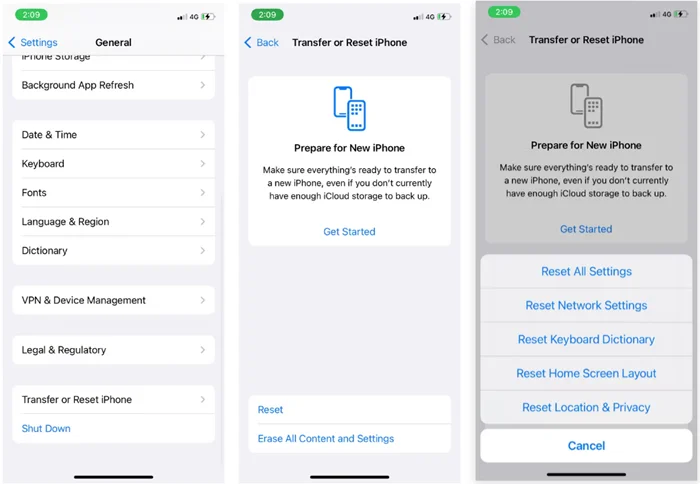
Resetting your network settings essentially refreshes your iPhone’s connectivity system. It removes all custom network configurations you’ve added and returns everything to its original factory defaults, just like when the device was brand-new.
All previously saved Wi-Fi networks and their passwords will be deleted. After the reset, you’ll need to reconnect to your favorite networks and enter passwords manually.
Any paired Bluetooth devices, such as headphones, speakers, or smartwatches, will be removed. You’ll need to pair them again to restore connections.
Custom VPN configurations and Access Point Names (APNs) will be reset to default. To continue using VPNs or connect to specific networks, these settings must be re-entered.
Any personalized cellular preferences, including data limits and network choices, will revert to their default state. This may temporarily affect how your iPhone uses mobile data until you adjust the settings again.
Although this reset removes network-related configurations, it does not affect your personal data. Photos, videos, apps, contacts, and app-specific settings remain untouched, ensuring your content and preferences are preserved.
There’s a big difference between a network settings reset and a factory reset. Resetting network settings generally removes all your local network, internet, and paired devices’ data. It won't delete any files stored on your device. Furthermore, it won't remove any data from your web browser, including your bookmarks or browsing history.
On the other hand, a factory reset clears out everything on your device. It reverts the device to its original state and deletes all the other essential data, including personal files, folders, and media on your device. All of your browser's saved bookmarks, browsing history, and third-party apps are removed as well.
Before performing a network reset, try problem-specific fixes first. You can also use general tips that often help fix Wi-Fi, cellular, and other network issues.
A simple restart can often resolve minor network glitches. Turn off your iPhone, wait a few seconds, and then power it back on to refresh the system.
Switching Airplane Mode on and off can help reset your device’s connections. Swipe down from the top-right corner or open the Control Center, then tap the Airplane Mode icon to enable it, wait a few seconds, and disable it again.
If a particular Wi-Fi network is giving you trouble, try forgetting it and reconnecting. Go to Settings > Wi-Fi, select the network, and tap Forget This Network, then reconnect by entering the password again.
Running the latest iOS version ensures your iPhone has the latest bug fixes and performance improvements. Check for updates by navigating to Settings > General > Software Update and install any available updates.
For Wi-Fi issues at home, ensure your router is properly configured and updated with the latest firmware. If problems persist, contact your internet service provider for support.
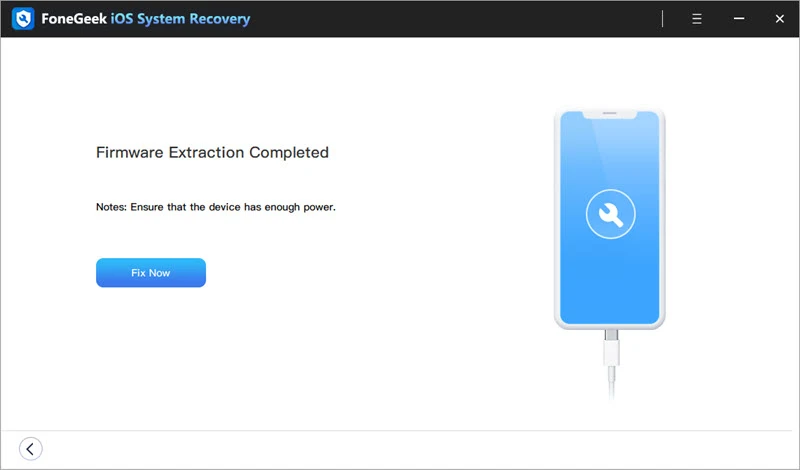
If none of these works, you can use a third-party iOS repair tool, such as FoneGeek iOS System Recovery, to fix the network issue you’re experiencing on your iPhone. It is capable of fixing all kinds of iOS system issues, including any network-related problems such as iPhone not connecting to Wi-Fi, iPhone constantly dropping Wi-Fi, iPhone weak signal, VPN not working, Mobile Data not working, and iPhone Bluetooth problems. It is very easy to use and can fix your network problem without any data loss. Also, it supports all iOS versions (even iOS 26/18) and all iPhone models (even iPhone 17/16).


Steps to Fixing Network Problems Using FoneGeek iOS System Recovery
If your iPhone continues to struggle with Wi-Fi, Bluetooth, or no service issues, a network settings reset can help. You’ll need to reconnect Wi-Fi networks and pair Bluetooth devices again, but it’s a proven way to solve most connectivity problems.
Well, resetting network settings will erase your iPhone's internet and network-related data. It’s much better to try out alternative ways like restarting your device, switching on Airplane mode, turning it off again, and reconnecting to WiFi. They can help fix the connectivity issues without requiring a network settings reset.
Doing a network reset on your device is safe because personal data don’t get lost during the process. Your photos, videos, music, etc., will remain intact. And your contacts or text messages won’t be deleted, too.
You’ll only face slight inconveniences, such as manually logging in and entering your password again in your Wi-Fi connections and having to pair your audio devices like headphones and speakers before you stream audio over Bluetooth.
Anytime you experience an issue related to Wi-Fi or Bluetooth connection on your iPhone, you can consider doing a network settings reset.
Resetting network settings can sometimes help improve Wi-Fi performance. However, if your connection remains slow, it may be due to the limitations of your internet plan relative to your usage. Another common reason is that unauthorized devices might be connected to your network, especially if you haven’t set a new Wi-Fi password after performing the reset.
The Reset Network Settings option only removes network-related data, while performing a full iPhone reset will erase all content and settings on your device. This includes photos, videos, files, documents, third-party apps, email accounts, and more. Essentially, a full reset restores your iPhone to its original factory settings.
What happens if I reset the network settings on my iPhone? Well, the answer to that question is pretty clear now. Hope this guide has helped you better understand what resetting networking settings means, how to do it, and what you can expect from it.
However, if it fails to work, or you don’t want to go through the hassle of entering your Wi-Fi login details again, we recommend using the FoneGeek iOS System Recovery. It will fix any network-related issue you’re facing, and no data or settings on your iPhone will be removed.

Fay J. Melton has explored the area of technology and software for more than 5 years and he is enthusiastic about helping users solve various technology issues.
Your email address will not be published. Required fields are marked *



Copyright © 2026 FoneGeek Software Co., Ltd. All Rights Reserved


 Fay J. Melton
 Last updated: Wednesday on Oct 29, 2025, 08:58:56
 iPhone Tips

 English
 简体中文
简体中文 繁體中文
繁體中文 Deutsch
 Português
 Español
 English